
As of June 2026, the most credible estimated range for Iván Duque's net worth sits between $2 million and $5 million USD, with most independent trackers clustering closer to the lower end of that range. That figure is based on a combination of his publicly disclosed assets during his presidency (2018–2022), his known salary as Colombian head of state, post-presidency consulting and advisory income, and real estate holdings documented in tax declarations reviewed by Colombian media. This is not a billionaire-tier profile. Duque is a career politician and lawyer, and his wealth reflects that, not a business empire.
Iván Duque Net Worth 2026 Estimate and How It’s Calculated

Ricardo Mendoza
23 Jun 2026
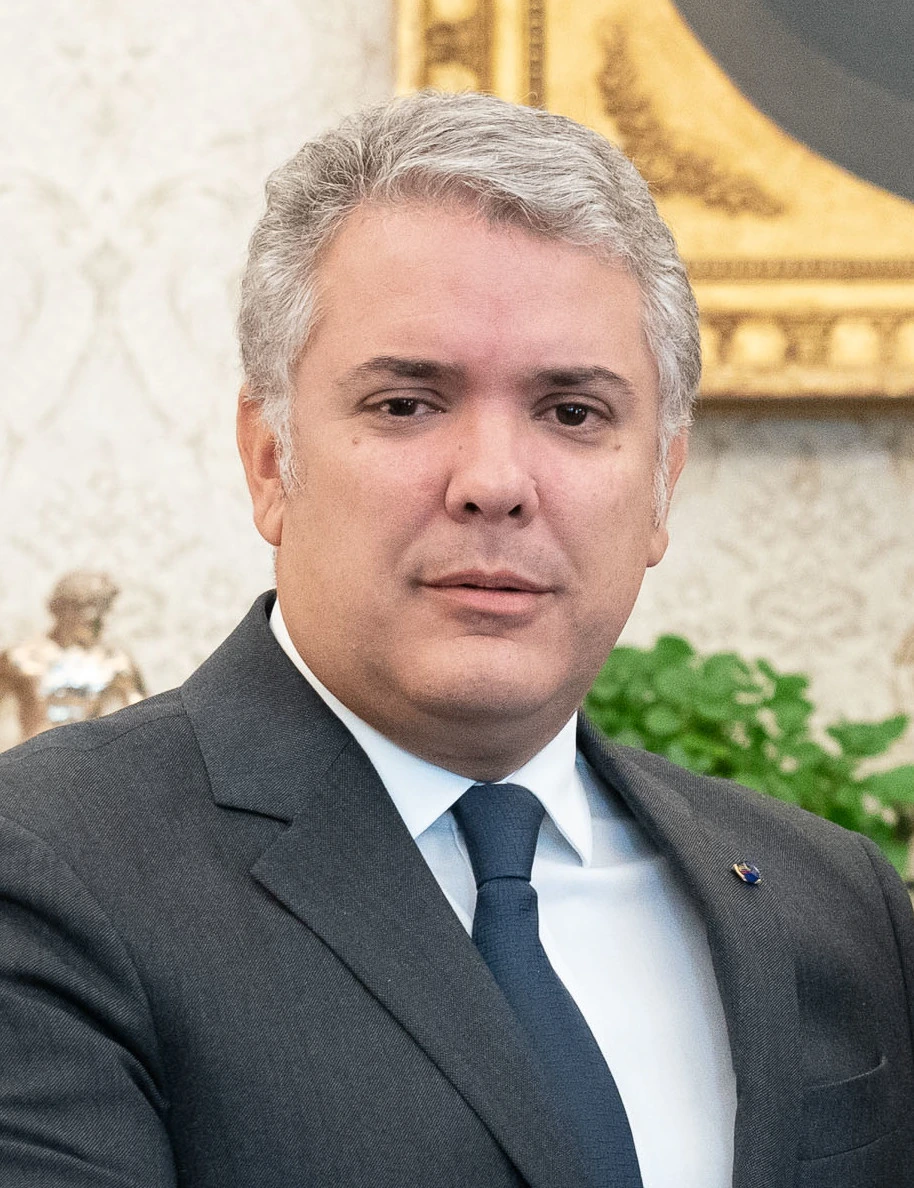
Who Iván Duque is and why his wealth profile looks the way it does

Iván Duque Márquez served as the 60th President of Colombia from August 2018 to August 2022, making him one of the most prominent Latin American political figures of that era. Before the presidency, he built a career in law and public administration, working with the Inter-American Development Bank (IDB) in Washington, D.C. for several years, and later serving as a senator in Colombia's Congress. He studied law at Universidad Sergio Arboleda in Bogotá, then earned a master's degree in economic law from American University in Washington, and an additional specialization from Georgetown. His income trajectory has followed the pattern of a professional public servant with institutional salaries rather than entrepreneurial wealth accumulation.
After leaving the presidency in 2022, Duque transitioned into international roles. He has been involved with organizations focused on digital policy, innovation, and governance consulting, and has delivered paid speaking engagements globally. None of these post-presidential activities have generated the kind of documented wealth that would push his estimate significantly above the $5 million mark, at least not based on publicly available evidence as of mid-2026. His asset base is relatively modest for a former head of state, anchored largely in real estate rather than investment portfolios or business equity.
How politicians' net worth is actually calculated
Estimating a politician's net worth is a different exercise than calculating the wealth of a celebrity or entrepreneur. There is rarely a stock price or publicly traded equity to reference. Instead, analysts and researchers piece together estimates from several overlapping sources: mandatory financial disclosures, media-reviewed tax declarations, known salary history, property records, and any documented business interests. For Colombian officials, this process is anchored in a specific legal framework.
Colombia's Ley 2013 de 2019, which President Duque himself signed into law on December 30, 2019, requires high-ranking public officials to publish their declarations of assets and income (bienes y rentas), conflicts of interest, and income tax returns through the government's SIGEP II platform (Sistema de Información y Gestión del Empleo Público). This is a public transparency tool managed by Función Pública, the national civil service agency. The disclosures are supposed to be publicly consultable for social control purposes, meaning ordinary citizens and journalists can look them up. Función Pública also notes that SIGEP II makes these declarations publicly available for social control purposes, supporting the transparency and legal compliance behind the disclosure system blank" rel="noopener noreferrer">publicly consultable for social control purposes. In practice, Colombian media outlets including WRadio and La República did exactly that during the Duque administration, publishing analyses of his and his cabinet's declared patrimony. La República also explained how access to those asset and tax disclosures was used to publish analyses based on the cabinet's publicly available filings WRadio and La República did exactly that during the Duque administration.
- Official salary as president or senator (publicly set by law)
- Asset declarations filed at the start and end of each public office term
- Annual income tax declarations uploaded to SIGEP II under Ley 2013
- Real estate holdings (apartments, properties listed in declarations)
- Financial obligations and liabilities (debt offsets the gross asset figure)
- Post-presidency income from speaking, consulting, and advisory roles
- Any private-sector participation disclosures filed during office
The net worth figure that comes out of this process is not perfect. Colombian declarations capture declared patrimony at a specific point in time, and they rely on self-reporting. However, they are far more grounded than the single-number estimates you will see on generic celebrity net worth aggregator sites, which rarely cite a methodology at all.
Where Duque's money likely comes from: a source-by-source breakdown

Presidential and government salary
The Colombian president's salary is set by the national government and is publicly known. During Duque's term, the presidential salary was in the range of approximately 35–40 million Colombian pesos per month (roughly $8,000–$10,000 USD at 2020–2022 exchange rates). Over a four-year term, this amounts to well under $1 million USD in gross salary, which is modest by international standards for a head of state. Before the presidency, his years at the IDB and as a senator would have earned comparable institutional salaries.
Real estate holdings

WRadio's analysis of Duque's published tax declarations referenced an apartment in Bogotá and an apartment in Washington, D.C. as documented assets. Real estate in Bogotá's better neighborhoods and in the Washington metropolitan area represents real but not extraordinary wealth. Combined, these two properties could reasonably account for $800,000 to $1.5 million USD in asset value, depending on location specifics and current market conditions, though precise valuations are not publicly confirmed.
Post-presidential consulting and speaking income
Since leaving office in August 2022, Duque has been active on the international circuit, particularly around technology governance, digital transformation, and Latin American policy discussions. Former presidents of major Latin American nations can command speaking fees ranging from $30,000 to $100,000 per engagement at international forums. The exact number and value of Duque's speaking engagements since 2022 are not publicly documented in any verifiable disclosure, so this component of his wealth is estimated, not confirmed.
What we do not know
There are meaningful gaps in the picture. Investment portfolios, private business stakes, and any deferred compensation or consulting retainers since 2022 are not captured in the public record. The SIGEP II declarations cover the presidential term, but post-presidential financial activity is only partially visible through media reporting and is not subject to the same mandatory disclosure regime. Any non-Colombian assets or income would also be difficult to trace without an active investigative process.
| Income/Asset Source | Estimated Contribution | Confidence Level |
|---|---|---|
| Presidential salary (2018–2022) | $350,000–$450,000 USD (gross, 4 years) | High (publicly set salary) |
| Real estate (Bogotá + Washington) | $800,000–$1,500,000 USD | Medium (referenced in media/declarations) |
| Pre-presidential salaries (IDB, Senate) | $500,000–$900,000 USD (career cumulative) | Medium (institutional roles) |
| Post-presidential speaking/consulting (2022–2026) | $300,000–$800,000 USD | Low (no public disclosure) |
| Investment accounts / other financial assets | Unknown | Very low (not publicly documented) |
| Liabilities/debt | Unknown offset | Unknown |
How Duque's wealth has shifted across career phases
Tracking Duque's wealth over time reveals a steady, incremental accumulation typical of a career public servant, not sudden windfalls or dramatic losses. There are four reasonably distinct phases worth understanding.
- Early career and IDB years (roughly 2001–2013): Duque spent years working for the Inter-American Development Bank in Washington, earning a professional institutional salary in USD. This period likely built the foundation for the Washington apartment and early savings. Wealth at this stage was probably modest, in the low six figures.
- Senate years in Colombia (2014–2018): As a senator, Duque earned a Colombian public salary and gained political prominence. No significant private-sector income is documented from this period. Declared patrimony for Colombian senators is public and typically shows middle-class to upper-middle-class asset levels.
- Presidential term (2018–2022): His salary was fixed and public. The Ley 2013 disclosures during this period represent the most transparent window into his finances. Media analyses of his tax declarations confirmed the Bogotá and Washington real estate and suggested a patrimony in the range of 2–4 billion Colombian pesos (roughly $500,000–$1 million USD at the time), which is consistent with the overall estimate range.
- Post-presidency (2022–present): This is the least documented phase. Former Colombian presidents often move into international advisory and speaking roles. Without mandatory disclosure requirements covering this period, the post-2022 income is estimated based on comparable figures for peers and publicly known engagements.
Why different websites show wildly different numbers

If you have already searched around before landing here, you have probably seen figures ranging from $1 million to over $10 million or higher depending on the site. If you are trying to find the hugo viana net worth figure, be extra careful, because many online numbers are not tied to document-backed disclosures like the SIGEP II process. That gap is not evidence of hidden wealth. It is evidence of how low-quality net worth content gets produced and spread online. Most generic celebrity net worth aggregators do not have researchers reviewing Colombian government disclosure databases. They copy each other, inflate for clicks, or apply crude formulas like multiplying a salary figure by an assumed savings rate.
Sites like NetWorthList.org and others publish Duque estimates but do not provide document-backed methodology or clearly dated update timestamps tied to actual new disclosures. UltraRichList focuses on billionaires and its ranking tables are not meaningfully applicable to a politician at Duque's wealth level. When you see a single round number with no sourcing, that is a red flag. When you see a cited range tied to specific disclosure documents, media analyses, or salary records, that is more credible.
- No source citation or methodology explanation: treat the number as a guess
- A single exact figure (e.g., '$4,000,000') with no range: almost certainly fabricated precision
- No update date or a date that does not match any known disclosure event
- Numbers that are wildly inconsistent with a politician's known salary history
- Sites that confuse Iván Duque Márquez with other individuals sharing a similar name
How to actually verify and update this estimate yourself
If you want to do your own due diligence on Duque's finances rather than rely on any single article including this one, the Colombian government's own infrastructure gives you real tools to work with. The process takes some effort but it is genuinely possible for a motivated researcher.
- Start with SIGEP II: Función Pública's SIGEP II system (available at sigep.gov.co) allows public consultation of asset and income declarations for obligated officials. You will need to go through an authorization/consent workflow to access individual records. Search for 'Iván Duque Márquez' in the declaraciones de bienes y rentas section.
- Check Datos Abiertos Colombia: The open data portal (datos.gov.co) hosts datasets of asset declarations filed under Ley 2013 de 2019. Search for 'Declaración de activos patrimonial servidores públicos' to access structured data that may include entries from Duque's presidential term.
- Review media analyses: WRadio and La República both published detailed reads of Duque's tax declarations during his presidency. These are searchable and provide the best plain-language summaries of what the declarations actually showed.
- Look for post-2022 disclosures: Check whether any international organizations Duque has affiliated with publish financial transparency reports or conflict-of-interest registers. Organizations like the IDB, the UN, or affiliated think tanks sometimes require their own disclosures.
- Cross-reference with property registries: In Colombia, the Superintendencia de Notariado y Registro maintains records of real estate transactions. Public property records can confirm or update real estate valuations referenced in older declarations.
- Watch for new media investigations: Colombian investigative outlets like La Silla Vacía regularly report on political figures' finances. Setting a Google Alert for 'Iván Duque patrimonio' or 'Iván Duque declaración de renta' will flag any new reporting.
The most important habit is distinguishing between a declared patrimony figure (what Duque filed in his official disclosure, which is a self-reported snapshot) and a net worth estimate (which tries to account for everything, including undisclosed or post-disclosure assets). Both numbers are useful, but they measure different things. A declared patrimony of 3 billion pesos during his presidency does not mean his total net worth today is that same number, because four years of post-presidential income have elapsed since those filings. If you are looking specifically for Eliecer Ávila's net worth, the most reliable approach is to separate any self-reported disclosures from freely repeated web estimates.
Putting it in context: political wealth in Latin America
Duque's estimated net worth of $2–5 million USD places him in the upper-middle range of career Latin American politicians but nowhere near the wealthiest political figures in the region. He is not a businessman-turned-politician with pre-existing private wealth, which is a relevant distinction. His financial profile is more comparable to other career-track heads of state with professional salaries, modest real estate, and post-service advisory income than it is to profiles involving major private equity, inherited wealth, or corporate executive backgrounds. Comparing him to figures like Eliecer Avila, who operates in a very different Cuban dissident political context with its own wealth opacity, or looking at institutional wealth profiles from entities like Avianca, illustrates how dramatically different net worth methodology and scale can vary even within a broadly Latin American political or business frame.
The bottom line: Iván Duque is not wealthy by the standards of global political elites, but he is financially comfortable by Colombian standards. His wealth is principally traceable to a long career in well-compensated public institutions, a small number of real estate assets, and a post-presidential profile that generates consulting and speaking income. The $2–5 million USD range, last updated based on available disclosure analysis as of early 2026, is the most defensible estimate available without access to sealed financial documents. If you are specifically comparing Iván Spagna net worth numbers online, be sure they are consistent with the same disclosure-based methodology and update timing. If you want a harder number, the Colombian public disclosure system gives you the best chance of finding one.
FAQ
How can I tell whether an Iván Duque net worth number online is credible or just inflated?
If you see a single number like “$9.3 million” with no date, no document references, and no explanation of what assets were included, treat it as low-confidence. More credible estimates usually tie back to SIGEP II disclosures and clearly separated components (declared patrimony, salary history, property valuation ranges, and any post-2022 income assumptions).
Why doesn’t Iván Duque’s declared patrimony during office automatically match his current net worth?
Because SIGEP II filings cover a specific snapshot during his presidency, you should not assume that declared patrimony equals today’s net worth. The closest “same-time” comparison is to look at the disclosure period and then adjust only for post-2022 income you can plausibly substantiate (for example, speaking fees with reasonable frequency) and for any major asset sales you can confirm.
What parts of Duque’s finances should I prioritize when sanity-checking an estimate?
Focus on the categories that can be cross-checked: real estate located in Bogotá and any international property disclosures, declared income sources, and any listed conflicts or businesses. Avoid over-weighting lifestyle claims or unnamed “business dealings,” since those are not equivalent to disclosed asset records.
Can SIGEP II help estimate Duque’s wealth after he left office in 2022?
Yes, but only partially. Post-2022 earnings like consulting retainers and speaking income may not be captured by the same mandatory disclosure regime that applies to high-ranking officials. As a result, many “current net worth” figures are really projections built on assumptions about how many engagements he did and what typical fee ranges were.
Why do net worth estimates for Iván Duque differ so much between articles?
The most common mistake is mixing currency conversion timing. If an article converts pesos to USD using an exchange rate from a different year, it can shift the estimate by hundreds of thousands. Use the same reference period when comparing two sources, or at least note the exchange-rate year each piece used.
What’s a good method to calculate Iván Duque net worth ranges without overstating precision?
Model the uncertainty explicitly. A practical approach is to treat real estate valuation as a range (based on location and market conditions), treat disclosed assets as fixed only up to the filing date, and then add a separate, lower-confidence “post-2022 income” bucket. That prevents one guessed variable from driving the entire number.
If someone claims Iván Duque is much richer, what claim should they be able to back up?
Not necessarily. At least for the $2 million to $5 million band, the investment portfolio and business equity components often appear small or unverified in public records, while declared assets and housing dominate the evidence base. If an estimate is much higher, check whether it introduces a specific, document-backed business stake or simply assumes large growth.
What’s the difference between declared patrimony, net worth estimates, and billionaire-style rankings when discussing Duque?
Treat “declared patrimony,” “net worth estimate,” and “wealth ranking” as different outputs. Declared patrimony is self-reported and tied to the disclosure date, net worth estimates attempt to be more comprehensive, and billionaire-style ranking tables often ignore the methodology required to place a former politician accurately.
Next Articles

Eliecer Avila Net Worth 2026 Estimate and How to Verify
Eliecer Avila net worth estimate as of 2026, with verification steps, income sources, likely assets, and reliability tip

Avianca Net Worth: Valuation Snapshot, Methods and History
Avianca valuation snapshot: how its company value is estimated, key drivers, reliability, and a history of restructuring
Ivana Spagna Net Worth 2026: Estimate, Sources, How It’s Calculated
Ivana Spagna net worth 2026 estimate range, income sources, milestones, and how the calculation works.