
Based on the best available public evidence as of June 2026, Pavel Mayer's net worth connected to Terravision is estimated in the range of $500,000 to $5 million USD. The $500,000 to $5 million range is a separate estimate for Pavel Mayer tied to Terravision claudio von planta net worth. That wide range is intentional: Terravision was never a standalone publicly traded company, and the corporate vehicles that own the relevant IP and equity are private German entities. There is no audited wealth disclosure, no public stock price, and no verified compensation figure on record. What we can piece together comes from patent records, German company registries, media reports, and legal proceedings.
Pavel Mayer Terravision Net Worth: Evidence-Based Estimate

Ricardo Mendoza
7 Jun 2026

Who Pavel Mayer is and what Terravision actually refers to

Pavel Mayer is a German software developer and entrepreneur who co-founded ART+COM AG, the Berlin-based digital art and technology studio where the Terravision project was born in the early 1990s. Terravision was a pioneering 3D virtual globe system that predated Google Earth by roughly a decade. Mayer is listed as an inventor on the related USPTO reissue patent (USRE44550), with the assignee entity named as ART+COM Innovationpool GmbH, which is the IP-holding vehicle connected to the Terravision technology.
Beyond ART+COM, Mayer also blank" rel="noopener noreferrer">co-founded Datango AG and later served as managing director and majority shareholder of Hoccer GmbH, a mobile app company that grew out of the ART+COM lineage. His profile, confirmed across German Wikipedia, THF Berlin event records, and a German podcast (CRE222) featuring him as a technical participant in the Terravision story, is that of a technical founder and operator, not a passive investor or outside commentator. This matters for the net worth discussion because his wealth, if any, is tied to equity stakes in private companies rather than publicly reported income.
The current net worth estimate: range and what it's based on
As of June 2026, the most defensible estimate for Pavel Mayer's net worth is $500,000 to $5 million USD. The low end reflects the reality that the Terravision-related patent litigation against Google ended with a jury verdict of non-infringement in favor of Google, meaning ART+COM Innovationpool GmbH did not realize a damages windfall from that case.
The higher end accounts for Mayer's documented majority-shareholder status in multiple private entities, including Hoccer GmbH, which attracted a reported 50 million euro investment from Media Ventures GmbH for a 51% stake. That investment, if it occurred while Mayer held a significant minority or majority, could imply a residual equity value. However, Hoccer GmbH later entered insolvency proceedings, which materially reduces that figure.
Companyhouse’s listing for Hoccer GmbH identifies Hoccer as a GmbH with the relevant register court context and notes insolvency proceedings, which helps explain why equity-based valuation risk is higher Hoccer GmbH later entered insolvency proceedings. There is no evidence of large real estate holdings, public-company stock, or reported high-salary executive compensation.
| Wealth Component | Status | Estimated Contribution |
|---|---|---|
| ART+COM AG / GmbH equity | Private, limited public data | Unknown; likely modest post-litigation |
| Terravision IP (ART+COM Innovationpool GmbH) | Lost Google litigation; non-infringement verdict | Negligible to low |
| Hoccer GmbH majority stake | Company entered insolvency | Likely impaired or zero |
| Datango AG co-founder stake | Early-stage tech co; status unclear | Historical, possibly liquidity event |
| Salary / consulting / technical director income | No public disclosure | Unverifiable |
Why Terravision being a private project changes everything

Terravision was never a publicly traded company. It was a project developed inside ART+COM, a private German AG (later converted to a GmbH) registered at the Amtsgericht Charlottenburg under HRB 68308 (and later HRB 247382 for ART+COM GmbH). Private companies in Germany are not required to publish shareholder-level compensation or individual equity valuations. Annual financial statements (Jahresabschlüsse) are filed with the Handelsregister and can be accessed, but they show company-level revenues and assets, not what individual founders or directors are worth personally.
This is the core reason why any net worth figure you see for Pavel Mayer on any website should be treated with skepticism. Without a public share price, a disclosed buyout, or a confirmed salary, every number is an estimate built on proxy assumptions.
The contrast with, say, a publicly traded Latin American media executive (like figures tracked on sibling profiles such as those connected to Univision's corporate structure) is stark: public companies file audited accounts and disclose executive compensation, which makes verification far more tractable. Those same verification hurdles also apply to search results for “Vic Latino” net worth estimates, which are typically built from similar indirect signals rather than audited personal disclosures Vic Latino net worth.
If you are also comparing this kind of figure to high-profile Latin American media executives, you might see similar net-worth estimation patterns discussed alongside Univision-linked corporate roles. You can compare how those more transparent corporate disclosures often help explain figures you may see when searching for Univision net worth Univision's corporate structure.
How net worth is actually estimated in cases like this
When there is no public filing, analysts and net worth reference sites use a layered proxy method. Here is how a reasonable estimate gets built for someone like Mayer:
- Identify ownership stakes: German corporate registries (Handelsregister via Companyhouse, OpenRegister, or the official Unternehmensregister) confirm who holds Geschäftsführer (managing director) and Gesellschafter (shareholder) roles. For ART+COM and Hoccer, Mayer's roles are documented.
- Estimate company valuation: Use any publicly disclosed investment rounds as anchor points. The 50 million euro Media Ventures investment for 51% of Hoccer Betriebs GmbH implies a pre-money valuation of roughly 47.5 million euros for 100% of the company. If Mayer held, say, 30% pre-dilution, that stake would be worth around 14 million euros on paper before any insolvency.
- Apply risk discounts: Private equity in early-stage or distressed companies carries illiquidity discounts of 30-70%. Hoccer's documented insolvency proceedings reduce that figure further, potentially to near zero.
- Factor in IP litigation outcomes: The non-infringement verdict in ART+COM Innovationpool GmbH v. Google Inc. means the Terravision patent produced no court-awarded damages. IP that loses litigation or settles for minimal amounts is usually worth very little on a balance sheet.
- Add known historical events: Any reported exits, salary disclosures, or confirmed consulting income are added. For Mayer, none are publicly confirmed.
- Cross-check against lifestyle and public signals: Media profiles, public records, and conference appearances can hint at financial standing, though these are weak proxies.
What sources to actually check and what to look for

If you want to do your own verification rather than rely on a single website's estimate, here are the concrete places to look:
- German Handelsregister (via handelsregister.de or Companyhouse): Search for ART+COM GmbH (HRB 247382, Amtsgericht Berlin-Charlottenburg) and Hoccer GmbH. Download available Jahresabschlüsse (annual financial statements). A 2024 annual report for ART+COM GmbH was published in February 2026, so recent data exists.
- USPTO patent database: Search patent number USRE44550 to confirm Mayer's inventor status and the assignee (ART+COM Innovationpool GmbH). This is primary-source confirmation of his technical and IP role.
- Justia patents search: Search 'ART+COM Innovationpool GmbH' to see all assigned patents and co-inventors, which maps Mayer's IP footprint.
- Court records (Justia, PACER): The ART+COM Innovationpool GmbH v. Google Inc. case (Case 1:14-cv-00217-RGA) includes complaint filings, docket documents, and the final verdict. These documents clarify the litigation outcome and any settlement signals.
- German media archives: WELT and other German publications have profiled Mayer in his capacity as R&D lead at ART+COM. These do not disclose net worth but confirm his organizational role.
- OpenRegister and Companyhouse: Both provide timestamped registry entries and management changes for ART+COM and Hoccer, letting you track when Mayer entered or exited leadership roles.
- PR Newswire and press release archives: The Media Ventures/Hoccer investment announcement is a primary source for the only publicly disclosed valuation figure in this ecosystem.
Why different websites show wildly different numbers
If you have already searched for Pavel Mayer's net worth and seen figures ranging from a few hundred thousand dollars to tens of millions, that variation comes down to three main problems: stale data, unverified assumptions, and conflation of gross company valuation with personal net worth.
- Stale snapshots: Many net worth sites pull figures once and never update them. A number built from the Hoccer pre-insolvency valuation (circa the Media Ventures investment) would look very different from a post-insolvency figure.
- Gross vs. net equity confusion: A site might see '50 million euro investment in Hoccer' and assume Mayer personally holds tens of millions. It ignores dilution, debt, insolvency, and the difference between enterprise value and what a founder actually pockets.
- Terravision the film vs. Terravision the software: A 2022 Netflix film called 'Terravision' is a separate creative work about the ART+COM story. Some sites conflate cast involvement, film royalties, or general Terravision brand notoriety with Mayer's actual equity position in the original technology.
- Currency and timeline assumptions: Euro-denominated German company values get converted with different exchange rates and at different points in time, producing different USD figures.
- No editorial update discipline: Sites that publish celebrity net worth without a methodology statement rarely flag when a key input (like a litigation loss or insolvency) changes the calculation.
This is a pattern you will also see when tracking other private-company-linked figures, including co-founders in the broader Terravision orbit. The same methodological discipline applies whether you are looking at Mayer or at other technically-focused founders whose wealth is locked in private German entities.
Practical next steps to keep this estimate current
Net worth estimates for private-company founders are not static. Here is how to update the Pavel Mayer Terravision estimate as new information emerges:
- Check ART+COM GmbH annual reports annually: The 2024 report was filed in February 2026. Set a reminder to check Companyhouse or the Handelsregister in early 2027 for the 2025 report. Look for revenue trends, asset values, and any notes on ownership changes.
- Monitor German insolvency registers: Hoccer's insolvency history is documented. Check the Insolvenzbekanntmachungen (official German insolvency announcements) to see if any distribution to shareholders has been recorded.
- Search Google Scholar and German legal databases for new patent or litigation activity: If ART+COM Innovationpool GmbH files new suits or licenses Terravision-related IP, that would materially change the IP valuation component.
- Follow Pavel Mayer's public activity: Podcast appearances, conference talks, and German tech press coverage can signal new ventures or leadership changes. The CRE podcast episode featuring Mayer is one example of where he discusses his role publicly.
- Track the ART+COM Handelsregister entry for management changes: Any change in Geschäftsführer status or shareholder structure will appear as a dated registry entry, visible through OpenRegister.
- Revisit this estimate whenever a major trigger event occurs: those include a new investment round in any Mayer-affiliated entity, a court ruling involving ART+COM IP, a company sale or merger, or a confirmed exit.
The bottom line is that Pavel Mayer is a technically significant figure in the Terravision story, a co-creator and long-time majority shareholder in the corporate lineage that built and owns the technology. Because Terravision was structured through private German entities, his wealth has to be inferred from equity stakes rather than public financial disclosures Terravision founders net worth.
But significant technical contribution does not automatically translate into significant liquid wealth, especially when the primary IP litigation failed, affiliated companies faced insolvency, and all equity is held in private German entities with limited public disclosure. The $500,000 to $5 million range, anchored in June 2026 data, reflects that reality honestly. You may also see similar discussions about violante placido net worth, but the underlying verification issues are often just as difficult for private-company-linked figures.
If you find a website claiming a dramatically higher number, ask what specific transaction or filing it is based on, and you will almost certainly find the answer is nothing verifiable.
FAQ
Why do net worth websites show such wildly different numbers for Pavel Mayer (Terravision)?
Treat “net worth” claims as either (1) an equity valuation proxy (based on private-company financials and assumed ownership) or (2) a liquidation proxy (what could be realized if assets were sold). For Terravision-linked entities, you usually cannot do (2) confidently because bankruptcy and IP ownership terms can change what investors would actually receive, so websites often default to (1) with aggressive assumptions.
Does being an inventor on the Terravision-related patent mean Pavel Mayer personally owns that technology and its value?
A patent being assigned to an IP-holding vehicle (for example, an ART+COM innovation pool type entity) does not automatically mean the inventor personally owns the patent. In Germany, IP rights are commonly held by a company, then value can flow to founders only if they also hold equity in the holder company.
Can I estimate Pavel Mayer net worth from assumed executive salary or consulting income?
If there was no verified personal compensation disclosure, you should not back into net worth using a salary-to-savings shortcut. Private-company founders can have low declared salaries and still hold value through equity, or they can have high salaries without meaningful equity, so mixing the two can easily inflate estimates.
What filings are actually useful if I want to verify Pavel Mayer Terravision net worth myself?
Yes, but only indirectly. German company filings provide company-level revenues, balance sheets, and sometimes notes, but they do not provide founder-level wealth. You can approximate ownership-linked value by identifying Mayer’s shareholding percentages in the specific holding companies and then comparing those companies’ equity on the latest filings, adjusted for insolvency risk.
Why does a reported investment amount for a Mayer-linked company not translate cleanly into higher net worth?
Often, “net worth” confusion comes from conflating (a) company valuation or investment amounts (for example, a reported funding headline) with (b) what any one shareholder can realize personally. Share class terms, liquidation preferences, dilution, and later insolvency can reduce personal proceeds far below the headline figure.
How should insolvency proceedings affect the high-end net worth claims for Pavel Mayer?
Use timeline logic. If Hoccer GmbH entered insolvency, you should discount any equity value from earlier rounds, and you should look for whether insolvency was driven by capital structure, asset sales, or IP exposure. Earlier funding may still matter, but only if there is evidence of surviving assets after insolvency.
How do net worth estimation patterns differ for private founders like Mayer versus publicly tracked executives?
Yes, if you are comparing with other executives, distinguish public-company transparency from private-company opacity. With publicly listed firms, compensation and share-based disclosures can be audited, while private German entities typically limit what you can confirm at the individual level, so “verification quality” differs even if both people are founders.
What evidence would actually justify a net worth figure far above the $500,000 to $5 million range?
Look for a specific verifiable event: a share sale, a buyout, a merger with cash-out, or an asset sale that clearly establishes proceeds distribution. Without that kind of event, any “tens of millions” number is usually just a speculative equity multiple rather than realizable wealth.
What is the most common mistake people make when estimating net worth for founders tied to private German companies?
Avoid using generic “valuation multiples” blindly. Private-company valuations are sensitive to leverage, IP ownership terms, and litigation outcomes, so a simple revenue multiple applied to a company that has insolvency risk can produce a misleading personal net worth projection.
How can I update the Pavel Mayer Terravision net worth estimate when new information appears?
The best practice is to re-check (1) any new Handelsregister entries that confirm shareholding changes, (2) updated Jahresabschlüsse for the relevant holding entities, and (3) any court docket outcomes that affect IP or asset ownership. If no new events appear, the credible range should not jump dramatically.
Next Articles

Terravision founders net worth: estimates and how they’re derived
Explica cómo estimar el net worth de los fundadores de Terravision con fuentes, rangos y método verificable.

Vic Latino Net Worth: Estimate, Income Streams, and How It Changes
Estimate and income breakdown for Vic Latino net worth, with sources, why numbers differ, and how it changes over time.
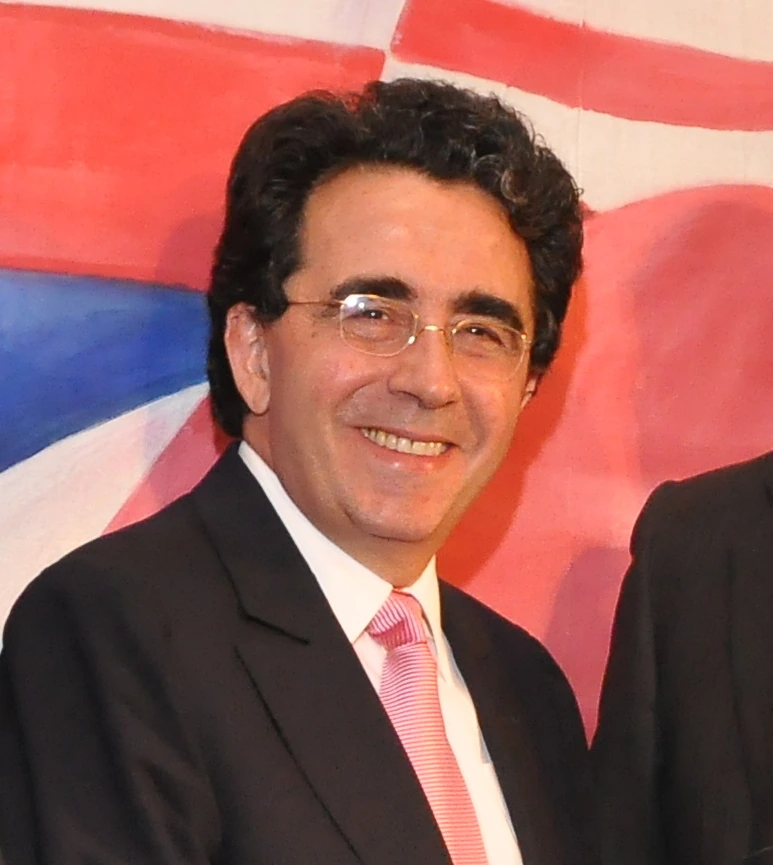
Calatrava Net Worth: Which Calatrava and Estimated Range
Estimate of Calatrava net worth with clear which Calatrava, wealth drivers, timeline, and transparent methodology.