
Here is the honest answer: there are no independently verified, Forbes-sourced net worth figures for Melchor and Vilma Caluag. Some aggregator sites claim Melchor Caluag is worth $600 million and Vilma Caluag $450 million, citing Forbes, but none of those pages provide a direct, linkable Forbes entry for either name. That makes those numbers unreliable as standalone facts. What we can work with is the public record: Vilma Caluag is a sitting Philippine local politician (Mayor of San Fernando, Pampanga), Melchor Caluag is her husband and a former barangay official, and both are subject to Philippine public disclosure rules that give us a legitimate starting point for any wealth estimate.
Melchor and Vilma Caluag Net Worth: Estimate and Methods

Ricardo Mendoza
27 Mar 2026
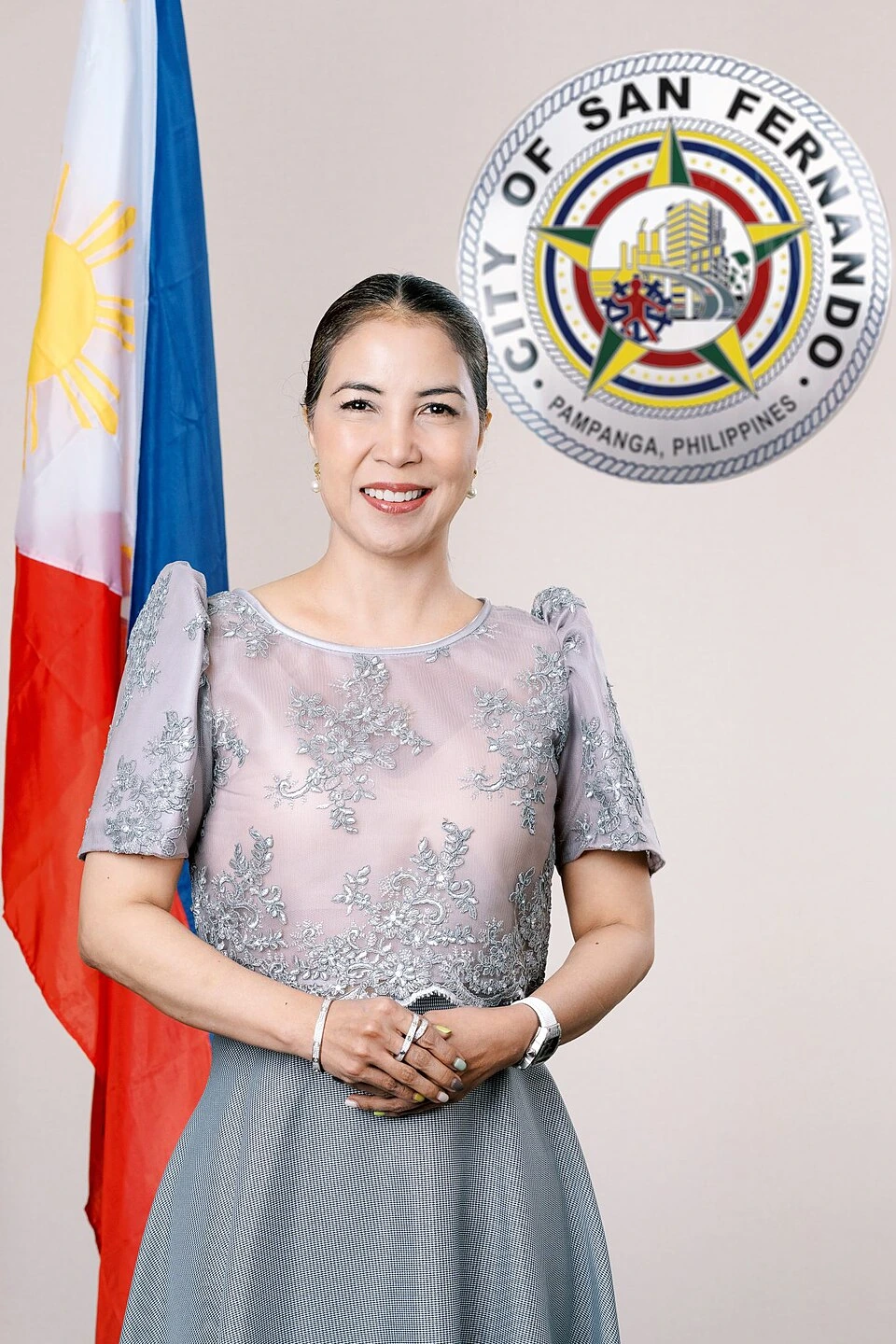
Who Melchor and Vilma Caluag are
Vilma Balle-Caluag was born on November 6, 1972, and has served as Mayor of San Fernando, Pampanga since her swearing-in on June 30, 2022, making her the first woman to hold that office. She won re-election in 2025, with GMA News covering her continued political prominence in the region. Her public identity is firmly in local Philippine politics, which is the lens through which her wealth is most meaningfully discussed.
Melchor Caluag is Vilma's husband. The two married when Vilma was 19 and Melchor was 21, and they have remained a visible political family unit in Pampanga. Melchor served as barangay captain of Barangay Dolores in San Fernando, placing him in the category of a local public official rather than a nationally prominent business figure or entertainer. Philstar reported on July 9, 2002, that Melchor Caluag was a barangay-campaign candidate in Pampanga, adding to the public context used to corroborate his identity beyond net-worth claims Melchor Caluag was barangay captain of Barangay Dolores. He has appeared alongside Vilma at oath-taking ceremonies and campaign events, but his independent public profile is significantly smaller than hers.
Neither Melchor nor Vilma Caluag appears on any verified Forbes Philippines or Forbes global wealth list. They are not the kind of public figures whose finances are tracked by major financial media outlets the way a listed company executive or a national celebrity would be. Their notability is regional and political, which shapes both the availability and the quality of wealth information about them.
What "net worth" actually means here

Net worth, in the Philippine government context, is defined exactly as you would expect: total assets minus total liabilities. This is the same framework used in the Statement of Assets, Liabilities and Net Worth, better known as the SALN, which every public official in the Philippines is legally required to file annually. The Ombudsman’s Pilot Review Programme explains that public disclosure compliance is monitored through SALN and related disclosures of assets and business/financial connections Statement of Assets, Liabilities and Net Worth, better known as the SALN. So when someone asks about Vilma Caluag's net worth, the most technically precise answer should come from her SALN filings, not from a third-party aggregator guessing at a number.
The challenge with SALNs, and with Philippine local politicians more broadly, is that while the framework exists, the public accessibility of filed documents varies. The Office of the Ombudsman and agency transparency portals are the official channels, but actual document availability depends on whether a specific official's SALN has been released publicly, in what detail, and for which years. Figures are often rounded and categorized in ways that make precise valuation difficult.
Estimates from aggregator websites that are not rooted in SALN data or verifiable asset records are essentially guesses dressed up as research. The $600 million and $450 million figures circulating online for Melchor and Vilma respectively fall into that category unless and until someone produces the underlying Forbes page, SALN document, or credible investigative report that supports those numbers.
How to actually estimate their net worth
A responsible wealth estimate for a Philippine local official follows a specific chain of evidence. The SALN is the anchor document. From there, you layer in corroborating sources: property records (which are publicly searchable through local assessor offices), SEC filings if either individual is a named officer or stockholder of a registered corporation, court case records that may reference assets or liabilities, and credible news reporting that references specific holdings or transactions.
For the Caluags specifically, useful cross-checks would include checking the SEC's corporate registry for any companies where Melchor or Vilma appear as incorporators, directors, or significant stockholders. PSE-listed company disclosures that name stockholders (as has been done in other research, for example in San Miguel Corporation's shareholder reports) can also confirm or rule out equity holdings. These steps take time but produce defensible numbers rather than recycled figures.
Lifestyle indicators, while less precise, provide a useful sanity check. Property ownership in Pampanga, vehicle registrations, and business affiliations tied to the local economy can all be used to ballpark a wealth range. For a barangay-level official turned city mayor, the realistic wealth tier is almost certainly far below the $450 to $600 million range that some sites suggest, unless there is substantial private business or inherited wealth that has not been publicly documented.
The current net worth range (and why it's a range, not a single number)

Based on available public information as of March 2026, no verified figure for Melchor or Vilma Caluag's individual net worth can be confirmed. The figures most commonly cited online ($600M for Melchor, $450M for Vilma) are not traceable to a primary Forbes source and should be treated as unverified aggregator claims. Given what we know about their careers and the typical wealth profile of Philippine local officials, a more realistic estimate based on general SALN data for officials at the city mayor level would place net worth in the range of tens of millions of Philippine pesos, which at current exchange rates would be in the low hundreds of thousands to low millions of US dollars, not hundreds of millions. If you are looking for “werevertumorro net worth,” the same rule applies: focus on primary, verifiable sources rather than republished aggregator numbers.
If the Caluag family has significant private business interests that have not been publicly reported, the range could be wider. But without documentation, claiming hundreds of millions of dollars would require extraordinary evidence that simply is not publicly available right now.
| Source Type | Cited Figure | Verifiable? | Reliability Rating |
|---|---|---|---|
| StartupNoon / aggregator sites | $600M (Melchor), $450M (Vilma) | No (no direct Forbes link provided) | Low |
| SALN filings (Philippines) | Not publicly confirmed for Caluags | Potentially, via Ombudsman portal | High (if accessible) |
| SEC corporate registry | Not confirmed | Yes, searchable | High |
| Local news reporting | General references, no specific figures | Partially | Medium |
| Property/land records | Not publicly compiled for Caluags | Yes, via local assessor | High (if searched) |
How their wealth has likely shifted over time
The clearest milestone in the Caluag wealth timeline is Vilma's entry into city-level politics in 2022. Becoming mayor of San Fernando, one of the larger and more economically active cities in Central Luzon, typically brings increased visibility, expanded networks, and often greater access to business opportunities. From a SALN perspective, it also creates an annual public disclosure obligation, which means any significant wealth change since 2022 should, in principle, be reflected in her filed documents.
Prior to 2022, the Caluags' political footprint was at the barangay level, with Melchor serving as barangay captain of Barangay Dolores. Barangay-level officials also file SALNs, so there is a paper trail stretching back years if those documents are accessible. The transition from barangay politics to city mayoralty likely represents the most significant potential shift in reported asset values.
In October 2023, both Vilma Caluag and others faced a vote-buying complaint tied to the barangay and sangguniang kabataan elections. Legal complaints involving public officials can have financial implications through legal costs and potential administrative proceedings, and they sometimes surface asset disclosures as part of case documentation. As of now, that case's financial impact on their net worth has not been publicly quantified.
Vilma's 2025 re-election as mayor signals continued political relevance and a second term's worth of SALN filings ahead, which will eventually provide additional data points for tracking wealth over time.
Why the numbers you find online contradict each other

Conflicting net worth claims for figures like the Caluags usually come down to a handful of well-documented problems. The most common is the fake Forbes citation: a site attributes a large number to Forbes without linking to an actual Forbes profile page. Once that number is published, other aggregators scrape it and republish it as if it were confirmed, creating a false consensus. That is exactly what appears to have happened with the $600M and $450M figures in circulation for the Caluags.
A second issue is name ambiguity. The surname Caluag is not uncommon in the Philippines, and search results can mix up different people who share a first or last name. If an aggregator site pulled wealth data from a different Caluag with business holdings and misattributed it to Melchor or Vilma, that error could persist across dozens of republished articles without anyone catching it.
Third, SALN data is sometimes misread or misrepresented. An official might list gross asset values without netting out liabilities, or property values might be declared at assessed value rather than market value, leading to inflated or deflated impressions of actual wealth. Sites that do not work directly with the source document and instead rely on news summaries of SALNs compound these distortions.
How to verify this yourself (and what to do when information is scarce)
If you want the most defensible answer on the Caluags' net worth, here is the practical workflow to follow:
- Request or search for Vilma Caluag's SALN through the Office of the Ombudsman's transparency portal or directly through the City of San Fernando's official disclosure channels. SALNs for mayors are public documents.
- Check the SEC iView or similar Philippine SEC tools for any corporation listing Melchor or Vilma Caluag as an officer, director, or stockholder. This will surface any formal business ownership.
- Search local government and land registration records in Pampanga for properties declared under either name. The Registry of Deeds and the Bureau of Internal Revenue's zonal values can help convert declared property to approximate market value.
- Search the Philippine Inquirer, SunStar Pampanga, GMA News, and Rappler archives for any investigative coverage of the Caluag family's assets or business interests. Local journalists often surface SALN details that are otherwise hard to find.
- Cross-reference any dollar figure you find online by checking whether the source actually links to a Forbes Philippines profile, a verifiable business registry entry, or a court document. If it does not, treat the figure as unconfirmed.
- Be alert to name mix-ups: confirm that the Melchor and Vilma Caluag referenced in any document match the San Fernando, Pampanga politicians by checking identifying details like birthdate, municipality, or position title.
When the information is genuinely limited, which is the case here, the most intellectually honest position is to say the net worth is unconfirmed rather than to assign a specific number. That is especially true when the figures in circulation are implausibly large relative to the subject's documented career and public profile. Comparing this kind of research to profiles of more heavily documented figures, like Willie Revillame's documented wealth trajectory, illustrates how much more evidence is typically available for nationally prominent figures versus regional political ones.
For researchers trying to understand wealth in the context of Philippine political families more broadly, the same methodology applies. SALN filings, SEC records, and property registrations are your primary tools. Aggregator sites, including many that appear authoritative, are secondary at best and misleading at worst when they cannot point to primary sources. This is a pattern that shows up across wealth research globally, not just in the Philippines. Even well-documented entertainment figures like Wilmer Valderrama, whose net worth is far more frequently reported, still carry uncertainty ranges because private assets are rarely fully disclosed. If you are trying to pin down Valderrama net worth figures, look for primary documentation first rather than relying on reused aggregator numbers.
The bottom line: treat any specific dollar figure for Melchor or Vilma Caluag with skepticism until you can trace it to a primary document. The SALN system exists precisely to create accountability for this kind of question, and it is the right place to start rather than finish your research.
FAQ
How can I tell if a reported “Forbes net worth” number for Melchor or Vilma Caluag is reliable?
An unverified “Forbes” number is usually a red flag if it cannot be traced to a direct, linkable Forbes profile or archived listing. For Philippine local officials, you should treat third-party dollar figures as speculative until they are anchored to SALN values, property records, or SEC registrations that name the individual by full name.
What should I do if Vilma or Melchor’s SALN documents are only partially accessible?
SALN is the best primary anchor, but availability matters. If an official’s SALN was not released publicly for certain years, you cannot responsibly interpolate a single “true” net worth. A defensible approach is to compute a range based on the closest available years, then note missing periods rather than filling gaps with aggregator estimates.
Why might SALN-derived net worth differ from what people assume is “real” wealth?
Even when SALN is available, figures can be misleading if someone compares “assessed value” to market value, or if they don’t net out liabilities. Property in particular may be declared at assessed figures, so a SALN-based sum can understate or overstate true market wealth depending on the valuation method used that year.
Could the commonly shared net worth figures be for a different Caluag?
Yes, but you must verify the match. Name ambiguity can cause an aggregator to mix people with the same surname and similar given names. The practical fix is to cross-check full names, office held (barangay captain, mayor), and location (San Fernando, Pampanga) against the underlying record source you are using.
How should I interpret changes in net worth claims around Vilma’s switch to mayor in 2022?
Be careful with timing. A big asset event could occur mid-term, but SALN filings may not immediately reflect market value swings because filings follow a yearly cycle and sometimes use declared or assessed values. When comparing “net worth before and after 2022,” focus on filing dates and whether the assets were acquired before the reporting period.
What evidence should I look for if the Caluags have private business interests?
If there are private businesses involved, net worth evidence may show up indirectly through holdings rather than through a personal “net worth page.” Check whether either spouse appears as an incorporator, director, officer, or significant stockholder in SEC records for registered companies, and then corroborate with any land, vehicles, or corporate disclosures tied to those entities.
Can vehicle and property clues be used to validate or refute very large net worth claims?
Lifestyle indicators help only as a sanity check, not as proof. For example, vehicle registrations and property listings can suggest capacity, but they do not confirm how much of the asset is owned versus leased or co-owned. Use them to see whether the claimed hundreds of millions of dollars would require an unusually large portfolio relative to observable assets.
Is it ever reasonable to report a specific net worth for a local official when SALN access is limited?
Not always. SALN documents may not be published in a uniform way across jurisdictions, and some records are difficult to retrieve quickly. If you cannot access the primary SALN or a reliable extraction of it, the most accurate statement is that the net worth is unconfirmed, not a forced number.
Could the vote-buying complaint involving 2023 elections materially change their net worth estimate?
Legal complaints can affect finances through defense costs, settlements, or administrative outcomes, but those effects are rarely disclosed as a net-worth impact in public. Unless case documents explicitly state asset-related findings or liabilities, you should not convert the existence of a complaint into a precise wealth adjustment.
What is the most defensible workflow to conclude “unconfirmed” versus reporting a number?
Use a simple decision rule: only treat a number as confirmed if it can be traced to (1) SALN values, (2) property records that support the asset figures, or (3) SEC/corporate disclosures that tie holdings to the individuals. If none of those trace back to primary documentation, treat the figure as an unverified claim and state a range or “unconfirmed.”
Next Articles

Wilmer Valderrama Net Worth 2026 Estimate, Sources, and Method
Wilmer Valderrama net worth 2026 estimate, income sources, assets, and how the figure is researched and verified online.
Valerio Saint Louis Net Worth: Estimate, Sources, and Breakdown
Valerio Saint Louis net worth estimate with income breakdown, source methods, wealth changes over time, and verification

Federico Valverde Net Worth: Salary, Income Sources and Growth
Estimate of Federico Fede Valverde net worth, key Real Madrid income, and why values vary over time.