
As of May 2026, David Vélez's net worth sits somewhere between $14.5 billion and $17.7 billion, depending on which tracker you trust and when they last updated. Forbes pegged him at $14.5 billion as of March 2026, while Bloomberg's Billionaires Index put the figure closer to $17.7 billion in February 2026. The gap is real, and it mostly comes down to methodology and timing, not disagreement about the underlying facts. Either way, Vélez is comfortably one of the wealthiest people in Latin America, and nearly every dollar of that wealth traces back to a single source: his equity stake in Nubank, the Brazilian fintech giant he co-founded in 2013.
David Velez Nubank Net Worth: How It’s Estimated Today

Ricardo Mendoza
15 May 2026
Which David Vélez Are We Talking About?

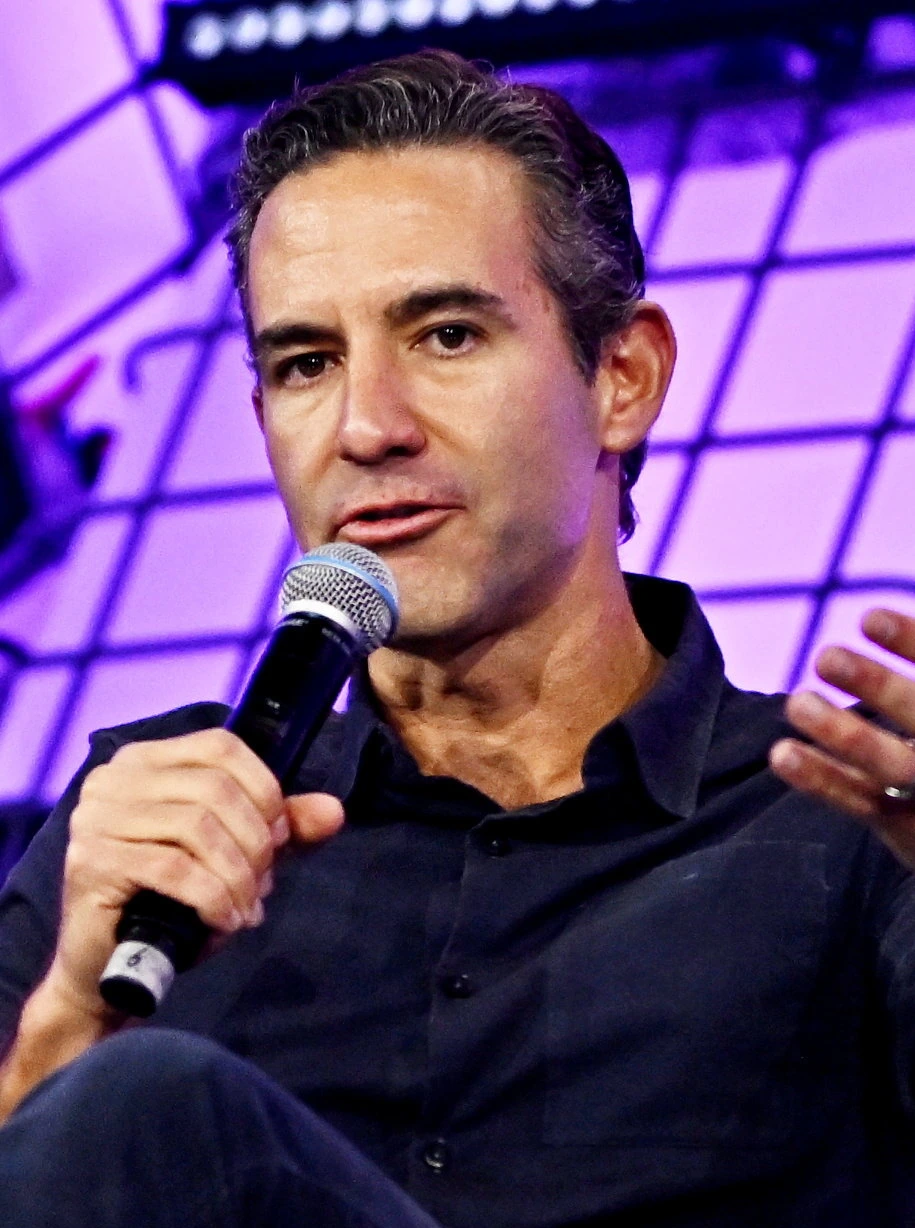
This is worth clearing up quickly, because the name David Velez generates several results. The David Vélez behind Nubank is David Vélez Osorno, a Colombian-born entrepreneur who co-founded Nu Holdings (the parent company of Nubank) in São Paulo in 2013 alongside Cristina Junqueira and Edward Wible. He currently serves as the company's chairman and CEO. He is not the same person as Oliver Velez (a trading educator), Christopher Velez (a member of the Latin pop group CNCO), or Ricky Velez (a comedian and actor), all of whom appear in searches for variations of the Velez name. Ricky Velez net worth estimates can vary widely too, especially when people mix up different individuals with similar names. Oliver Velez has a very different profile, and estimates of his net worth follow separate facts and sources Oliver Velez net worth. If you searched for 'David Velez Nubank net worth,' this is absolutely the right person. If you meant Norberto Vélez instead, you can compare this Nubank-linked profile with norberto vélez net worth estimates before you treat any number as the same person. If you want the specific figure people search for, that David Vélez net worth is driven primarily by his Nubank equity stake. Christopher Velez net worth figures can vary by source, but they ultimately depend on his stake valuation, share price moves, and the timing of the latest filings.
His Net Worth Range Right Now and What Drives It
Vélez's wealth is almost entirely tied to his ownership stake in Nu Holdings Ltd., the Cayman Islands-incorporated holding company that trades on the NYSE under the ticker NU. Nubank went public in December 2021 in one of the largest IPOs in Latin American history. At the time of the IPO, Vélez's stake made him a billionaire several times over almost overnight. Since then, the number has moved sharply in both directions as Nu's stock price has fluctuated.
The core driver is simple math: Vélez holds a controlling block of Nu Holdings equity. According to SEC filings, he beneficially owns approximately 88.3% of Nu's outstanding Class B ordinary shares, which translates to about 74.3% of combined voting power. That dual-class structure means he retains enormous control over the company even as he sells some Class A shares. His economic stake (the portion of total company value he actually owns) is meaningfully smaller than his voting power, but it is still massive given Nu's market capitalization, which has been hovering in the $55–70+ billion range through late 2025 and into 2026.
Forbes reported that his fortune rose roughly 36% year-over-year, from about $10.7 billion in early 2025 to $14.5 billion by March 2026. That jump tracks with Nu's strong earnings performance and rising share price over the same period. Bloomberg's higher figure of $17.7 billion reflects a different snapshot date and possibly a slightly different methodology for estimating the size of his economic ownership.
Where the Money Actually Comes From

Equity in Nu Holdings
This is the big one, by far. Vélez holds his Nu shares primarily through a vehicle called Rua California Ltd., a company he controls. SEC filings, including Schedule 13G and Form 3 disclosures, confirm that Rua California Ltd. holds both Class A and Class B shares on his behalf. Because Class B shares carry superior voting rights, this structure lets him retain control of Nubank as a public company even as his percentage of total economic ownership naturally dilutes over time through employee equity grants and other issuances.
Insider Share Sales

Vélez has converted some of his paper wealth into cash through insider sales. In August 2025, Reuters reported that he sold approximately 33 million Class A shares via Rua California Ltd., generating proceeds of around $435.6 million. These transactions are filed with the SEC and publicly disclosed, making them one of the most reliable data points we have for understanding how much liquid wealth he has actually extracted from the company. Insider sales of this scale are common for founders of large public companies and do not necessarily signal bearish sentiment about the business.
CEO Compensation
Nu Holdings discloses executive compensation in its annual SEC filings (Form 20-F). Like many founder-CEOs, Vélez's direct cash salary is likely modest relative to the value of his equity holdings. The company does use share-based compensation plans, and equity awards to executives are disclosed in the company's 6-K quarterly filings and annual reports. The precise terms of Vélez's personal compensation package require digging into the proxy-equivalent disclosures in the 20-F, but his day-to-day CEO pay is essentially a rounding error compared to what his equity is worth.
Other Investments and Business Interests
There is no widely documented second business empire here. Unlike some tech billionaires who diversify heavily into venture funds, real estate portfolios, or separate operating companies, Vélez's publicly known wealth is concentrated almost entirely in Nu Holdings. It is possible he holds private investments or participates in VC deals that are not publicly disclosed, but these are not currently factored into the major trackers' estimates.
Assets and Lifestyle Signals Researchers Use
For a public company executive like Vélez, lifestyle signals are a secondary input, not the main event. Net worth researchers primarily anchor estimates to publicly available SEC data. That said, a few external indicators are worth noting.
- SEC beneficial ownership filings (Form 3, Schedule 13G, and the 20-F annual report) are the gold standard. They disclose exactly how many shares Vélez holds, through which entities, and in which share classes.
- Insider transaction filings (Form 4 equivalents and 6-K disclosures) track any shares sold, gifted, or transferred, which directly affects the economic stake underlying wealth estimates.
- Nu Holdings' market capitalization on the NYSE is the pricing mechanism. Every day the stock moves, Vélez's paper net worth moves with it.
- The Giving Pledge commitment Vélez and his wife Mariel Reyes made in 2021 is a notable lifestyle signal. They pledged to donate the majority of their wealth to philanthropy during their lifetimes, which has long-term implications for the actual wealth that remains in the family versus what gets directed to charitable causes.
- Publicly available interview transcripts and speaking appearances (including Goldman Sachs-sponsored talks) help corroborate his role and career timeline but are not used for valuation.
There is no major publicly documented real estate portfolio, yacht collection, or other asset class that researchers point to as a significant wealth component outside his Nu equity.
How Net Worth Estimates Are Built and Updated
The two most credible trackers for a figure like Vélez are Forbes and Bloomberg's Billionaires Index. Here is how both approaches generally work.
Forbes maintains an active profile for 'David Vélez and family,' last updated in March 2026, with an interactive wealth history component. Their methodology starts with the number of shares or ownership units a billionaire controls, values those at current market prices (or at recent transaction prices for private assets), and then applies a debt estimate and tax haircut to arrive at a net figure. For Vélez, whose wealth is almost entirely in publicly traded Nu Holdings shares, this is relatively straightforward: take his estimated economic stake in NU shares, multiply by the stock price on the reference date, and account for any known share sales or dilution events.
Bloomberg's Billionaires Index works similarly but updates in near-real-time as stock prices move. Their February 2026 figure of $17.7 billion reflects a different stock price moment than Forbes' March 2026 figure. Bloomberg also publishes methodology notes on individual profile pages that explain exactly which holdings and assumptions are driving the number.
Both trackers are updated when there are material events: a large insider share sale, a significant change in Nu's stock price, a new SEC ownership filing, or a funding round that reprices a private holding. For Vélez, the biggest update triggers are Nu's quarterly earnings releases and any disclosed insider transactions.
How His Wealth Has Changed Over Time
| Period | Approximate Net Worth | Key Driver |
|---|---|---|
| Pre-IPO (before Dec 2021) | Not publicly tracked / private valuation basis | Nubank private funding rounds (Series A through Series H at valuations up to ~$30B) |
| December 2021 (IPO) | ~$8–9 billion (IPO-day estimate) | Nu Holdings lists on NYSE at ~$41.5B market cap; Vélez's stake valued for the first time publicly |
| 2022 (post-IPO decline) | Dropped significantly (~$3–5B range estimated) | NU stock fell sharply after IPO amid global tech selloff; paper wealth contracted heavily |
| Early 2025 | ~$10.7 billion | Nu stock recovered strongly; company turned consistently profitable; user base crossed 100M+ |
| March 2026 (Forbes) | ~$14.5 billion | 36% year-over-year gain; Nu's strong 2025 earnings and rising share price |
| February 2026 (Bloomberg) | ~$17.7 billion | Bloomberg real-time snapshot at a higher NU stock price point |
The overall trajectory is a classic founder-equity story: years of illiquid wealth tied up in a private company, an explosive IPO, a painful post-IPO correction (which was brutal for Vélez on paper in 2022), and then a strong recovery as Nubank's fundamentals caught up with and arguably exceeded the hype. The fact that he has also executed large insider sales along the way means a portion of that wealth is now in liquid or diversified form rather than sitting entirely in NU shares.
Myths, Bad Numbers, and How to Verify What You Read
There are a few categories of unreliable information that circulate around wealthy founders like Vélez.
Stale numbers presented as current
Because Vélez's net worth is almost entirely equity-linked, numbers go stale fast. An article published in mid-2022 citing a $3 billion figure is not wrong for its moment, but it would be wildly inaccurate today. Always check the publication date on any estimate. If it is more than a few months old and NU's stock price has moved materially, the number is outdated.
Viral social media figures with no source
Posts claiming Vélez is worth $25 billion or $8 billion with no linked methodology or reference date should be ignored. These numbers often copy-paste from old articles, confuse market cap with personal net worth, or mix up different people named David Velez.
Confusing Nu Holdings' market cap with Vélez's personal wealth
This is one of the most common errors. Nu Holdings' total market cap is $55–70+ billion. Vélez does not own all of that. His personal economic stake represents a fraction of outstanding shares (the exact percentage varies as shares are issued or sold). His wealth is his stake times the stock price, not the whole company's value.
Misidentifying which David Velez

Searches for 'David Velez net worth' can surface information about different individuals. David Vélez Osorno the Nubank CEO is the subject here, but the name is common enough that confusion is easy.
How to validate a number yourself
- Go to SEC EDGAR (sec.gov) and search for 'Nu Holdings' or 'Rua California Ltd.' Pull the most recent Form 20-F annual report and look at the beneficial ownership table to find Vélez's current share counts.
- Find the current NU stock price on NYSE and multiply his share count by that price. This gives you a gross equity value before any debt or tax assumptions.
- Check the Forbes Real-Time Billionaires or Bloomberg Billionaires Index pages directly, both of which publish their methodology alongside the estimate.
- Look for recent Reuters or SEC-filed Form 4 equivalent disclosures of insider transactions to see if Vélez has sold shares recently, which would reduce his outstanding stake.
- Cross-check the date on any estimate you find elsewhere. If NU has moved 20% since that article was published, the number is proportionally outdated.
One additional factor worth keeping in mind: Vélez and his wife have signed The Giving Pledge, committing to donate the majority of their wealth to philanthropy. This does not reduce his current net worth on any tracker's ledger today, but it does mean that over time, the wealth being built through Nubank may flow substantially into charitable vehicles rather than remaining as personal family wealth. That context matters if you are thinking about his long-term financial picture rather than just the headline number.
FAQ
Why do David Vélez net worth numbers differ so much between Forbes and Bloomberg?
Check whether the estimate is “as of” a specific reference date and whether it values his stake using Class A versus Class B pricing. Because Nu has a dual-class structure, two trackers can reach different net worth figures even when both are using the same SEC ownership percentage, but different assumptions about market pricing and economic versus voting value.
How can I tell if an online “David Velez Nubank net worth” claim is actually wrong?
If you see a figure that looks like Nu Holdings market cap multiplied by 100%, it is probably confusing company value with personal net worth. Vélez’s net worth is driven by his economic stake in Nu shares, not the full market capitalization of the company.
If he sells shares as an insider, does that permanently lower his net worth?
Yes, but only to a limited extent. Insider sales like the disclosed Class A share sales via Rua California Ltd. reduce the “paper wealth” embedded in shares, converting some value into liquid proceeds. However, until you also see corresponding SEC disclosures of ongoing reductions in his remaining stake, the total net worth range will still mostly track Nu’s stock price.
How quickly do net worth trackers reflect new changes in Nu’s stock price?
Trackers can lag behind reality because they update on material events, such as quarterly earnings and new SEC ownership filings. Even with frequent updates, a sudden stock move between update dates can make today’s live market valuation differ from the latest published net worth snapshot.
What is the best way to verify the ownership details behind the net worth estimate?
Use SEC filings to verify the ownership base and holding vehicle, then treat public net worth estimates as models built on that ownership. Specifically, look for disclosures tying Rua California Ltd. to the share classes he controls, and then compare that to any “economic stake” percentage used by the tracker.
Why might Bloomberg’s number change faster than Forbes’s?
Bloomberg’s method can feel more volatile because its index updates closer to market moves, while Forbes can use a fixed reference date with a documented snapshot. So a large gap is often timing, not a disagreement about facts.
Does The Giving Pledge mean his net worth should be lower on trackers today?
Donations tied to The Giving Pledge generally do not reduce the headline net worth number immediately on most public trackers, because pledges often represent commitments rather than an already-transfered trust or sold asset. The key difference over time is whether assets are actually moved into charitable vehicles.
Can I use lifestyle clues, like property or luxury purchases, to estimate his net worth?
Don’t rely on lifestyle rumors as a proxy for net worth for him, because the publicly visible asset base is dominated by Nu Holdings equity. A credible number should align with SEC-reported ownership plus share-price-based valuation, not unverified claims about real estate or personal assets.
What identity mix-ups happen with “David Velez Nubank net worth” searches?
Look for the person identity first. “David Velez” searches can mix results from other public figures with similar names, and some sites may reuse outdated or mismatched content. If the page does not clearly tie the subject to Nu Holdings and the chairman or CEO role, treat it as unreliable.
Could his net worth be higher than trackers show because of undisclosed investments?
Yes, but only as far as those investments are disclosed and valued consistently. Since most major trackers anchor heavily on public Nu holdings, any private VC or other investments not captured in filings can be excluded, meaning the tracker range may understate the full picture if he has additional assets.
Next Articles

Norberto Vélez Net Worth: Estimate, Sources, and How It Changes
Norberto Vélez net worth estimate with range, currency, evidence signals, and how it changes over time and why estimates

Christopher Velez Net Worth: Estimate Range, Methods, and How to Verify
Christopher Velez net worth estimate range, time frame, and how to verify using filings, records, and reliable evidence.

Ricky Velez Net Worth: Estimate, Sources, and Updates
Disambiguates Ricky Velez and estimates net worth with sources, income breakdown, method, reliability, and update histor