
Rolando Villazón's net worth in 2026 is reasonably estimated at $5 million to $10 million USD. That range is built from more than two decades of high-fee opera performances, an exclusive recording deal with Deutsche Grammophon, a long-running Rolex ambassadorship, and now a salaried artistic directorship at the Mozarteum Foundation in Salzburg. No audited financial disclosure exists for him, so any specific number online is a modeled approximation, but the income signals consistently point into that mid-seven-figure zone.
Rolando Villazón Net Worth Estimate and How It’s Calculated

Ricardo Mendoza
22 May 2026
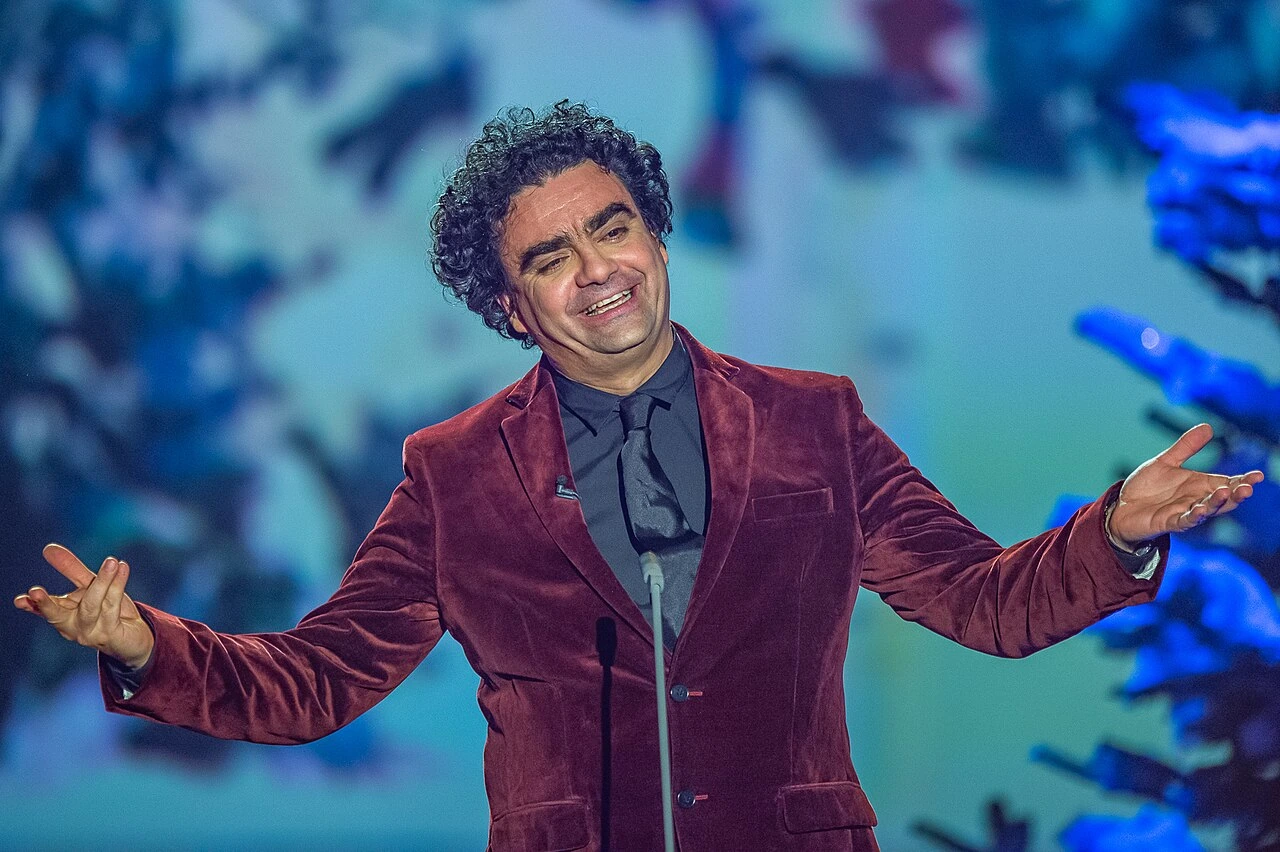
Who Rolando Villazón is and why people search his net worth
Rolando Villazón is a Mexican-born lyric tenor who became one of the most recognized opera voices of his generation. He won both the Zarzuela Prize and the Audience Prize at Plácido Domingo's Operalia competition in 1999, which effectively launched his international career. From there he built a reputation at houses like the Vienna State Opera, the Bayerische Staatsoper, and the Opera de Monte-Carlo. His 2025-26 season includes a house debut as Pelléas in Marco Arturo Marelli's production of Pelléas et Mélisande at the Vienna State Opera, which tells you he is still performing at the highest tier of the business.
Beyond singing, Villazón has moved into stage directing, TV and radio presenting, and fiction writing. In January 2026, the Stiftung Mozarteum Salzburg announced an extension of his contract as artistic director through 2031, cementing a leadership role that includes oversight of Mozart Week. He is also a Rolex Testimonee since 2005 and an ambassador for RED NOSES Clown Doctors International. That combination of performer, arts administrator, brand partner, and public personality is exactly why fans and curious researchers keep searching his finances. If you are also researching Rene Vaca net worth, you can use the same approach to separate verified signals from online estimates. He does not fit neatly into a single income bucket.
The current net worth estimate and what backs it up

The most defensible range for 2026 is $5 million to $10 million. The lower bound comes from sites like voxhour.com, which pegged him at roughly $5 million as of late 2023, and from biographypot.com's 2022 approximation. The upper bound reflects the cumulative effect of sustained elite-level performance fees, a multi-album exclusive recording contract with Deutsche Grammophon (signed in 2005 and renewed by 2012), a two-decade Rolex partnership, and a now-formal institutional salary from the Mozarteum. PeopleAI's December 2025 modeled estimate also lands in this range, though that platform is explicit that its figures are algorithmic approximations, not verified holdings.
It is worth being honest about confidence level here. Classical music performers at Villazón's stature earn very well but rarely accumulate the kind of wealth you see in pop or sports, partly because classical touring is smaller-scale and partly because management fees, production costs, and the extended preparation time for operatic roles cut into gross earnings significantly. A $5-10 million estimate feels grounded. A figure above $15 million would require evidence of substantial real estate holdings or business equity that has not surfaced in any public reporting.
Where the money actually comes from
Performance fees
Top-tier opera tenors at major houses typically command per-performance fees in the range of $15,000 to $50,000 or more, depending on the house, the role, and the performer's current market standing. Villazón has performed at Vienna, Munich, Salzburg, Monte-Carlo, and comparable venues across his career. Operabase's aggregated performance history confirms a dense schedule over more than two decades. Even at a conservative average and accounting for down periods (he reduced his schedule significantly around 2009-2011 due to vocal health issues), the cumulative performance income across his career is substantial.
Recording royalties (Deutsche Grammophon)

Deutsche Grammophon signed Villazón to an exclusive deal in 2005, renewed the relationship by 2012, and continues to list him as a catalog artist. His recording of Verdi's La Traviata with Anna Netrebko achieved platinum status in Austria and sold over 30,000 units there alone, which is exceptional for classical music. Recording royalties in classical music are modest per unit, but a globally distributed catalog with multiple platinum-level titles across 20-plus years adds a meaningful passive income layer.
Rolex ambassadorship
Rolex has listed Villazón as a Testimonee since 2005, a relationship spanning more than 20 years. Luxury brand ambassadorships at this level are not typically disclosed publicly, but industry norms for top-tier arts ambassadors at a brand like Rolex suggest annual retainers that can range from low six figures upward. Over two decades, this partnership alone likely represents a significant cumulative contribution to his overall financial picture.
Artistic directorship at the Mozarteum
As of January 2026, Villazón's blank" rel="noopener noreferrer">contract as artistic director of the Stiftung Mozarteum Salzburg runs through 2031. Foundation artistic director salaries at major European cultural institutions typically sit in the range of €150,000 to €300,000 annually, though the Mozarteum has not publicly disclosed the exact figure. This represents guaranteed, stable income that reduces his dependence on the variable per-performance market.
Television, radio, and media work
Villazón has hosted and appeared on classical music television and radio programs, which carry their own presenter or appearance fees. His profile as a media-friendly classical musician, combined with his fiction writing and stage directing career, broadens his income streams beyond traditional performance. These contributions are harder to quantify without specific contracts but are consistent income channels for artists at his public profile level.
Masterclasses, jury roles, and institutional engagements
Given his Operalia history (he won in 1999 and has maintained close ties to the competition ecosystem, including Operalia 2024 involvement), jury participation and masterclass engagements are plausible recurring income sources. Top vocal coaches and jury members at major competitions typically receive honoraria ranging from a few thousand dollars to considerably more, depending on the institution.
Why net worth numbers for Villazón vary so much online

If you search around, you will find figures ranging from under $5 million to vague claims in the tens of millions. If you are specifically looking for Elliot Villar net worth, use the same approach to compare multiple estimates and the income signals behind them. If you are also comparing figures like Martín Vaca net worth, remember that the same estimation issues apply, since most sites rely on assumptions rather than verified holdings.
The disagreement is not mysterious once you understand how these estimates are made. Most net worth sites use one of a few methods: multiply estimated annual income by an assumed savings rate, apply a multiplier to visible income signals, or simply copy and update prior estimates without new data. None of them have access to Villazón's bank accounts, investment portfolios, or contracts.
- Revenue vs. profit confusion: gross performance fees look very large, but after agent commissions (typically 10-20%), travel, production-related costs, and taxes, net income is significantly lower.
- Exchange rate timing: Villazón earns in euros and is frequently assessed in USD, so estimates published at different times can look wildly different depending on EUR/USD rates at that moment.
- Asset valuation gaps: unless a performer sells real estate or a business publicly, real estate holdings and investment accounts are invisible to outside researchers.
- Career-phase mismatches: estimates that predate his vocal health period (roughly 2009-2011) or that do not account for his pivot to directing and administration will be systematically off.
- No verified disclosures: Villazón has not filed public financial disclosures (he is not a politician or publicly traded entity), so every number is inferred, not confirmed.
Assets, lifestyle signals, and what they tell you
Villazón is based in Europe and has been for most of his professional life. He has significant professional ties to Salzburg, Vienna, and Munich. European real estate in those markets, if he owns property there, would represent meaningful asset value, but no public property records have surfaced in reporting. His lifestyle signals are those of a serious artist rather than a conspicuous-consumption celebrity: he writes novels, advocates for RED NOSES Clown Doctors, and is publicly associated with cultural diplomacy (Mexico's Conaculta named him Embajador de la Cultura de México in 2010). That profile is more consistent with someone who manages money carefully than with someone burning through it.
The Rolex partnership is the clearest luxury-brand lifestyle signal, but it is also a professional relationship rather than a personal spending indicator. Classical musicians at his level generally maintain a comfortable but not extravagant lifestyle relative to their income, which means wealth tends to accumulate rather than dissipate quickly. That further supports a mid-seven-figure estimate rather than something lower.
A timeline of wealth and earnings signals
| Period | Key Financial Signal | Estimated Impact |
|---|---|---|
| 1999 | Operalia win (Zarzuela Prize + Audience Prize) | Career launch, access to major house fees |
| 2005 | Deutsche Grammophon exclusive deal signed; Rolex Testimonee begins | Stable recording income + long-term brand retainer |
| 2005-2008 | Peak performance phase at Vienna, Munich, Salzburg, Monte-Carlo | High cumulative performance fees; La Traviata goes platinum in Austria |
| 2009-2011 | Reduced schedule due to vocal health issues | Temporary income dip; partial offset from label royalties and Rolex |
| 2012 | Deutsche Grammophon contract renewed | Continued recording income stream |
| 2010 | Named Embajador de la Cultura de México by Conaculta | Non-commercial but reinforces institutional relationships |
| Post-2012 | Expansion into stage directing, TV/radio presenting, novel writing | New income streams diversify earnings base |
| 2025-26 | Vienna State Opera house debut as Pelléas; Mozarteum contract extended to 2031 (announced Jan 2026) | Active performance fees + guaranteed institutional salary through 2031 |
How to verify and refine the estimate yourself today
The best approach is to triangulate from multiple independent signals rather than trusting any single net worth site. Here is a practical sequence you can follow right now in 2026.
- Check Operabase (operabase.com) for Villazón's recent performance schedule. A dense current schedule at top-tier houses confirms ongoing high-fee activity and supports the upper end of any estimate.
- Search his official site (rolandovillazon.com) and the Mozarteum Foundation's press releases for any contract or role announcements. The January 2026 contract extension through 2031 is publicly documented and is a concrete income anchor.
- Look at Deutsche Grammophon's artist page for new releases. New recording activity signals continued label income. Streaming performance data (where available via platforms like Spotify for Artists or public charts) can give a rough sense of catalog reach.
- Search Rolex's official Testimonee pages for any updates to Villazón's profile. A continued listing confirms the ambassadorship is active.
- Run a news search (Google News, AP, Reuters) for Villazón + any major contracts, real estate transactions, or business filings. Nothing significant has surfaced publicly as of May 2026, but this is worth checking periodically.
- Cross-reference any net worth figure you find with the publication date. Estimates from 2020 or earlier should be treated as historical baselines, not current values, given the Mozarteum appointment and continued active career.
- For Austrian or German real estate or business filings, the relevant registries are the Grundbuch (land registry) in Austria and Germany, though access requires knowing specific addresses or registered entities. This is an advanced step most casual researchers will skip, but it is the correct route if you need genuine asset verification.
To put it plainly: the $5-10 million range for Rolando Villazón in 2026 is the most defensible estimate available without insider financial data. In the case of Ricardo Villalobos net worth, reliable figures are similarly hard to confirm without direct financial disclosure $5 million to $10 million. The bottom of that range is well-supported by even conservative income modeling.
The top of the range becomes credible when you factor in 20-plus years of compounding income from performances, recordings, and the Rolex deal, alongside ongoing institutional earnings at the Mozarteum. If anything significant changes, such as a major real estate sale, a disclosed business stake, or a high-profile contract announcement, the tools above are exactly where you will see it first.
You may also see similar “net worth” writeups for other public figures like Ricardo Vega, but the same caveats about unverifiable data apply.
FAQ
How do net worth sites calculate Rolando Villazón net worth if they do not have his real financial statements?
Most “net worth calculators” start with estimated annual earnings (performance fees, institutional salary, media work, endorsements), then assume a savings or investment rate and apply a multiplier. For Villazón, the most sensitive variable is usually endorsement income and how it is treated (retainer vs. per-appearance fees), because classical music performance income is comparatively easier to bracket.
Why can his earnings look high even when his net worth estimates do not reach tens of millions?
With his profile, an estimate in the $5 to $10 million band can still be consistent even if his gross yearly income fluctuates. Operatic careers have “feast and preparation” cycles, and the public-facing schedule does not show unpaid rehearsal time, management commissions, and production costs that reduce take-home pay.
What specific evidence should I prioritize when verifying Rolando Villazón net worth claims?
If you want to sanity-check the range, look for evidence of (1) long-term institutional compensation tied to his Mozarteum leadership, (2) recording catalog scale (multiple releases plus sustained sales), and (3) multi-year brand partnerships that are renewed. Absence of public disclosures on assets matters more than absence of performance dates.
What are the most common mistakes people make when estimating Rolando Villazón’s finances?
A figure can be overstated if a site assumes the top of the luxury-brand market is directly transferrable to Rolex retainers, or if it treats royalties as large cash streams without accounting for typical classical royalty rates and long distribution times. It can also be understated if the site ignores institutional salary components and assumes he earns only from stage work.
How can I tell which Rolando Villazón net worth estimates are more trustworthy?
Check whether a site provides a transparent method. The more it relies on “updated from prior year” claims without new contract or asset information, the less you should trust it. In your range approach, give more weight to changes you can date (contract extensions, new major role contracts, major label renewals) rather than undated totals.
Could Rolando Villazón’s net worth be higher or lower than the $5 to $10 million range due to non-public investments or taxes?
Yes, but you need to interpret “net worth” correctly. If Villazón uses earnings to fund taxes, representation, staff, and ongoing professional development, his liquid net worth may grow slower than fans expect. Also consider that artists sometimes hold wealth through investments that are not obvious from lifestyle signals.
What would have to be true for Rolando Villazón net worth to credibly exceed $15 million?
If you see claims above $15 million, treat them as weak unless they are tied to something verifiable, like disclosed major real estate ownership, a clearly documented equity stake in a business, or filings that indicate substantial holdings. Without that, the most likely explanation is optimistic multiplier assumptions or cherry-picked income.
Does one successful role or recording materially change Rolando Villazón net worth estimates, or is it mostly about long-term trends?
Because wealth estimates depend on “how much he saves and invests,” the biggest edge case is not a single high-earning year, but a long-term pattern. A heavy spending pattern, high debt, or large support payments could keep net worth flatter even with strong income, while disciplined investing could push net worth upward faster within the same income band.
What should I monitor going forward to refine the Rolando Villazón net worth estimate?
To update your estimate in 2026 or later, watch for dated contract news (extensions, salary changes), major new recording releases with the same label, and public announcements of large-scale touring or leadership roles. Those are the events most likely to change the inputs behind a modeled net worth.
How should I interpret lifestyle and brand partnerships when estimating Rolando Villazón net worth?
Lifestyle signals should be used as a cross-check, not a proof. A luxury brand partnership indicates business relationship value, not necessarily the personal spending level behind it. For artists, a “comfortable but not flashy” public presence can still coexist with significant asset accumulation.
Next Articles

Ricardo Vega Net Worth and Ricardo Vega Serrador Net Worth
Disambiguates Ricardo Vega vs Serrador, then explains how his net worth estimate is calculated, sources, assumptions, an

Ricardo Villalobos Net Worth: Estimate and How It’s Calculated
Estimated Ricardo Villalobos net worth with a clear breakdown of DJ income, costs, assumptions, and uncertainty.

Martín Vaca Net Worth 2026: Estimate, Sources, and How It’s Calculated
Martín Vaca net worth 2026 estimate with range, calculation method, income sources, and how to verify claims.